Bartitsu Club 1899-1902
|
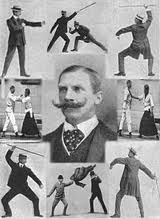
Around the beginning of the 20th Century London became home to a truly unique Club. This club was the brain child of Edward Barton-Wright. A British born Engineer with a lifelong interest in Sports and Physical Culture, he returned from working in Japan as a Railway Engineer, with the seeds of a new method of self-defence. He combined his experience of European sports and defensive arts with his newly learned Eastern martial arts namely Jujitsu and Judo.
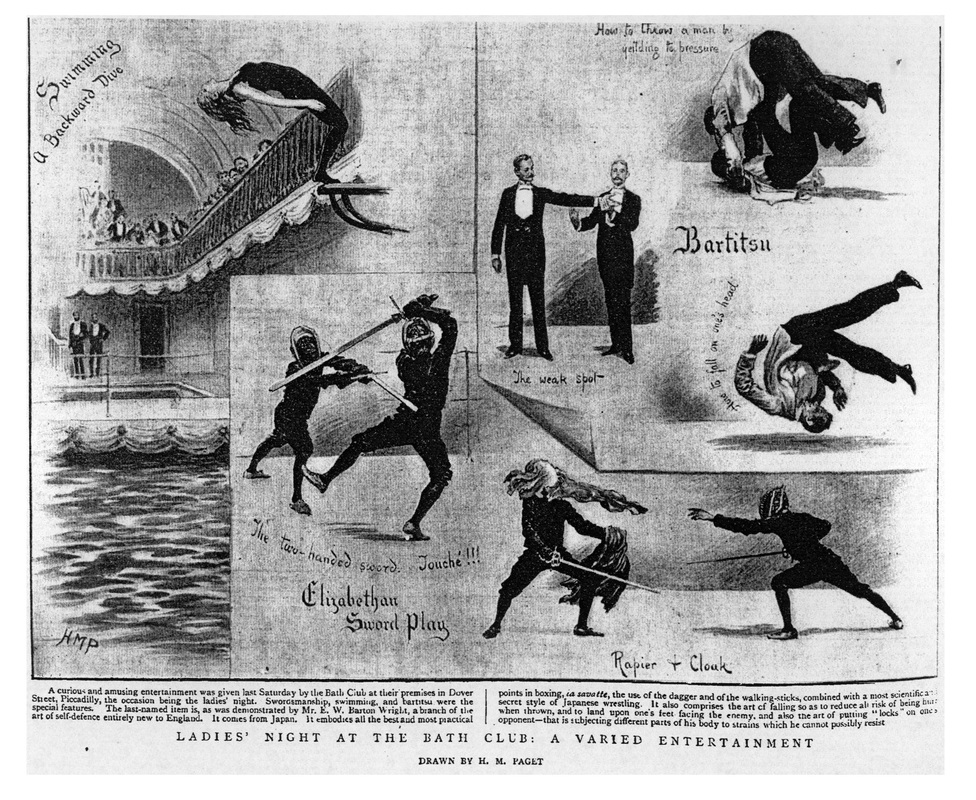
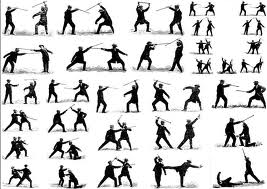
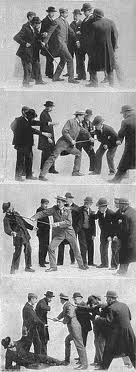
Barton-Wright went about talking and writing of his new method of self-defence in the hopes of winning himself a following. He challenged champions from the more traditional European arts to test his new method. Many of the people who saw him admitted that he had found something new and innovative. He did have those who didn’t see the advantages of his new methods, but they were far fewer than those who did. He published regular articles in various periodicals and gained a wider following. With this following he went about setting up a club where people could come to be taught and practice this new system. A major drawcard of the Bartitsu club was that he recruited champions from around Europe and even from Japan to be his instructors. He used his champions to promote his Club by arranging public bouts and displays fights. The Bartitsu Club’s life was short lived (1899-1902) but from it came a number of important historical points. 1 Bartitsu was the first Martial Art combining Western and Eastern martial arts. 2 Bartitsu was the first Mixed Martial Art (MMA) 3 From the women’s self-defence classes run by the Bartitsu Club the Suffragette movement learned the art of Jujitsu for defending themselves against the police. This would shape the militant arm of the movement and lead to some of the most brutal struggles that the movement faced. The varied nature of the Arts taught as part of Bartitsu was so that in the case of an assault you would be able to defend yourself from attacks from different ranges and multiple attackers. The ability to take the fight to your attackers was taught but the philosophy that if you can get away safely it was best to do so rather than risk a fight. The choosing of champions of the various arts to teach was part of the eventual downfall of the Bartitsu Club, these strong personalities would fall out and then set up rival clubs where they taught their own Arts, reducing the number of people paying to attend. Barton-Wright continued to promote his Bartitsu but the public lost interest in this fad. Over time Barton-Wright was forgotten as was Bartitsu. Sir Arthur Conan Doyle made a misspelled reference to Baritsu in "The adventure of the empty house", which intrigued people for the best part of 100 years. In the 1990’s a group of martial arts enthusiasts started to look into this lost art and discovered a martial art many years ahead of its time and have spent the best part of 20 years in putting it back together from journals, contemporary images and studying the works of the champions who taught there. Bartitsu is rapidly become the sport of choice of the Steampunk movement and Victorian History enthusiasts. |
|
